
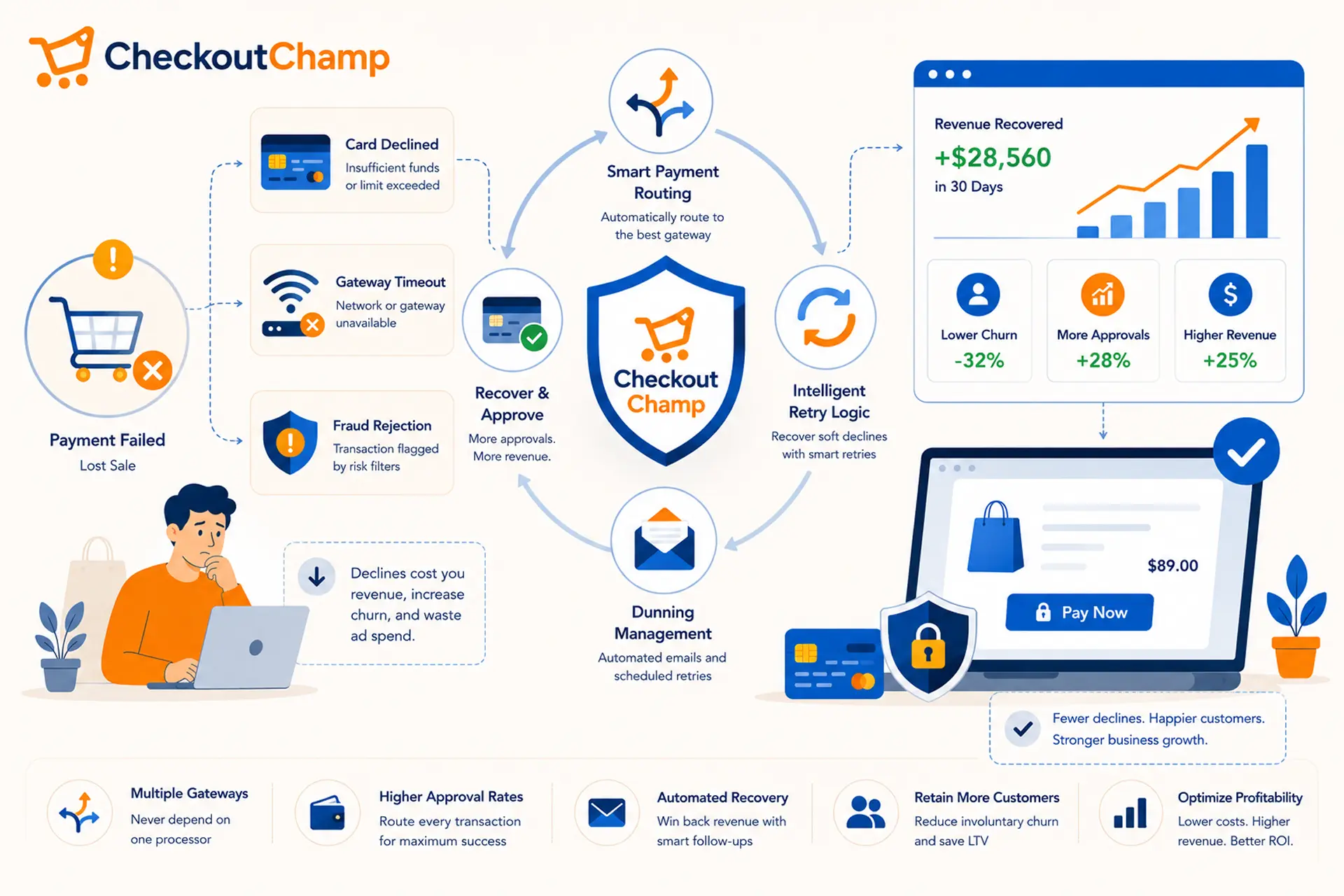
In modern e-commerce and subscription retail, getting a customer to the checkout screen is only half the battle. Industry baseline data shows that 15% to 20% of online credit card authorization attempts fail, turning high-intent shoppers into lost revenue.
When a transaction drops, the impact ripples across your business: it raises Customer Acquisition Cost (CAC) waste, damages brand affinity, and accelerates involuntary churn non-payment for subscription models. Using a high-converting direct-to-consumer platform like Checkout Champ helps streamline checkout flows, but optimizing back-end processing is equally essential to prevent drop-offs.
Implementing structured failed payment recovery strategies—such as payment orchestration, smart retries, and automated dunning—helps brands capture rejected legitimate transactions and protect long-term customer lifetime value (LTV).
Soft Declines vs. Hard Declines: How to Recover Rejected Legitimate Orders
Understanding how to reduce failed payments begins with diagnosing issuer decline codes. Every authorization response falls into one of two categories:
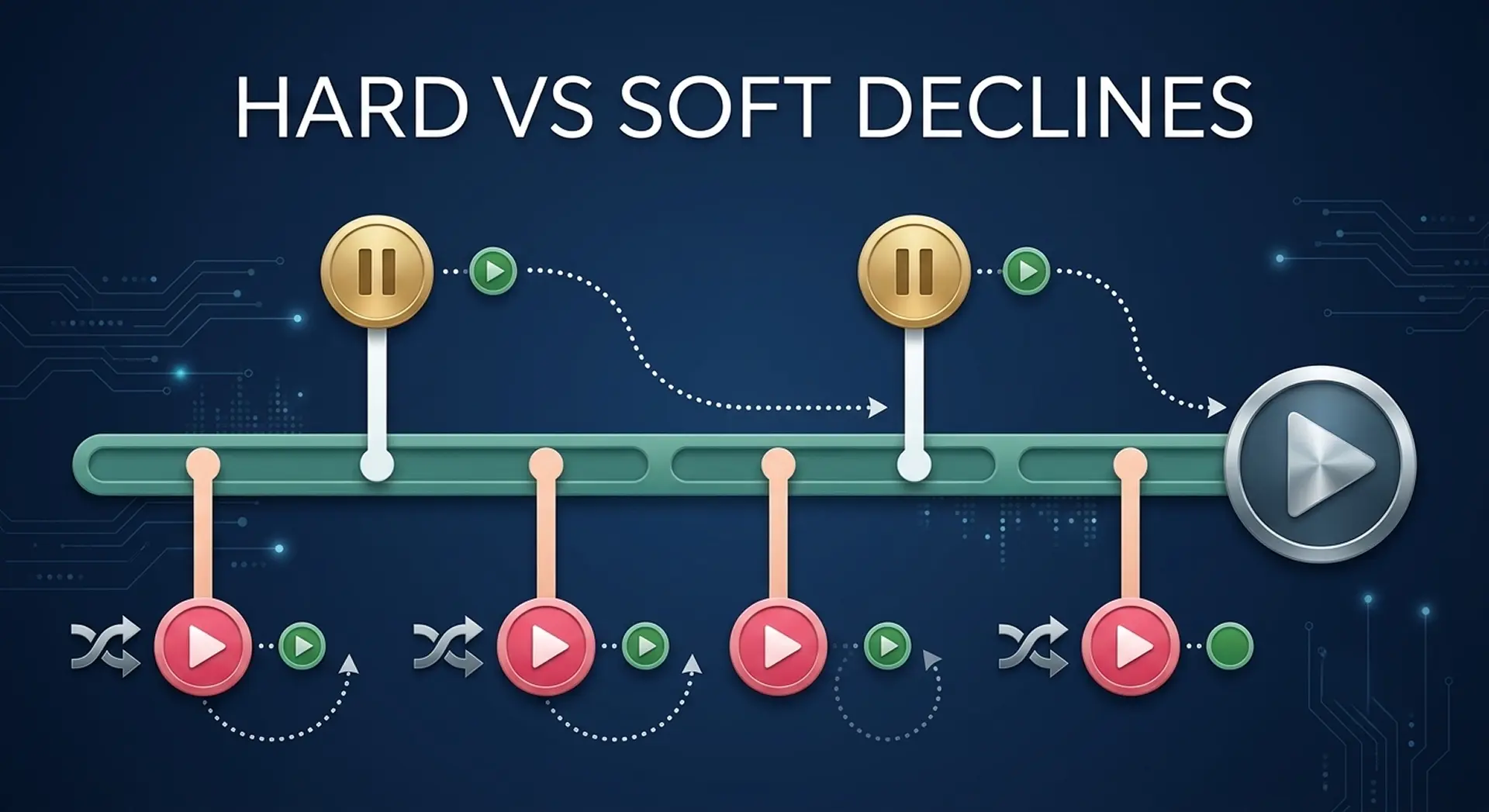
| Feature | Soft Declines (Temporary) | Hard Declines (Permanent) |
|---|---|---|
| Primary Causes | Insufficient funds, network timeouts, processing limits, temporary fraud spikes. | Stolen card, closed account, invalid card details. |
| System Behavior | Legitimate customer with temporary transaction blockage. | Card account cannot accept charges. |
| Recovery Strategy | Sub-second cascade routing, automated retry schedules, fallback gateways. | Immediate dunning outreach (email/SMS) to update payment method. |
| Automation Tool | Payment orchestration software & smart retry logic. | Account Updater Services & automated dunning flows. |
What Causes Failed Payments and False Declines in E-Commerce?
Payment drops happen across three distinct technical and operational friction points:
1. Overly Aggressive Fraud Filter Overkill
Standard fraud detection rules frequently block legitimate orders (false declines). When genuine buyers shop using corporate VPNs, purchase high-ticket items, or place orders across international borders, strict merchant risk models mistake them for fraudsters.
2. Gateway and Processor Outages
Relying on a single merchant gateway leaves your business exposed to micro-outages and regional latency. Even when using optimized checkout platforms like Checkout Champ, if your primary payment processor experiences a brief server timeout during heavy traffic, valid card transactions drop automatically.
3. Outdated Stored Credentials
For recurring subscriptions, expired credit cards or changed account numbers lead directly to passive churn. Without background card updates, billing engines default to immediate payment failures.
How Payment Orchestration and Smart Retries Prevent Involuntary Churn
To recover revenue lost to soft declines without adding manual overhead, enterprise merchants rely on automated payment orchestration infrastructure.
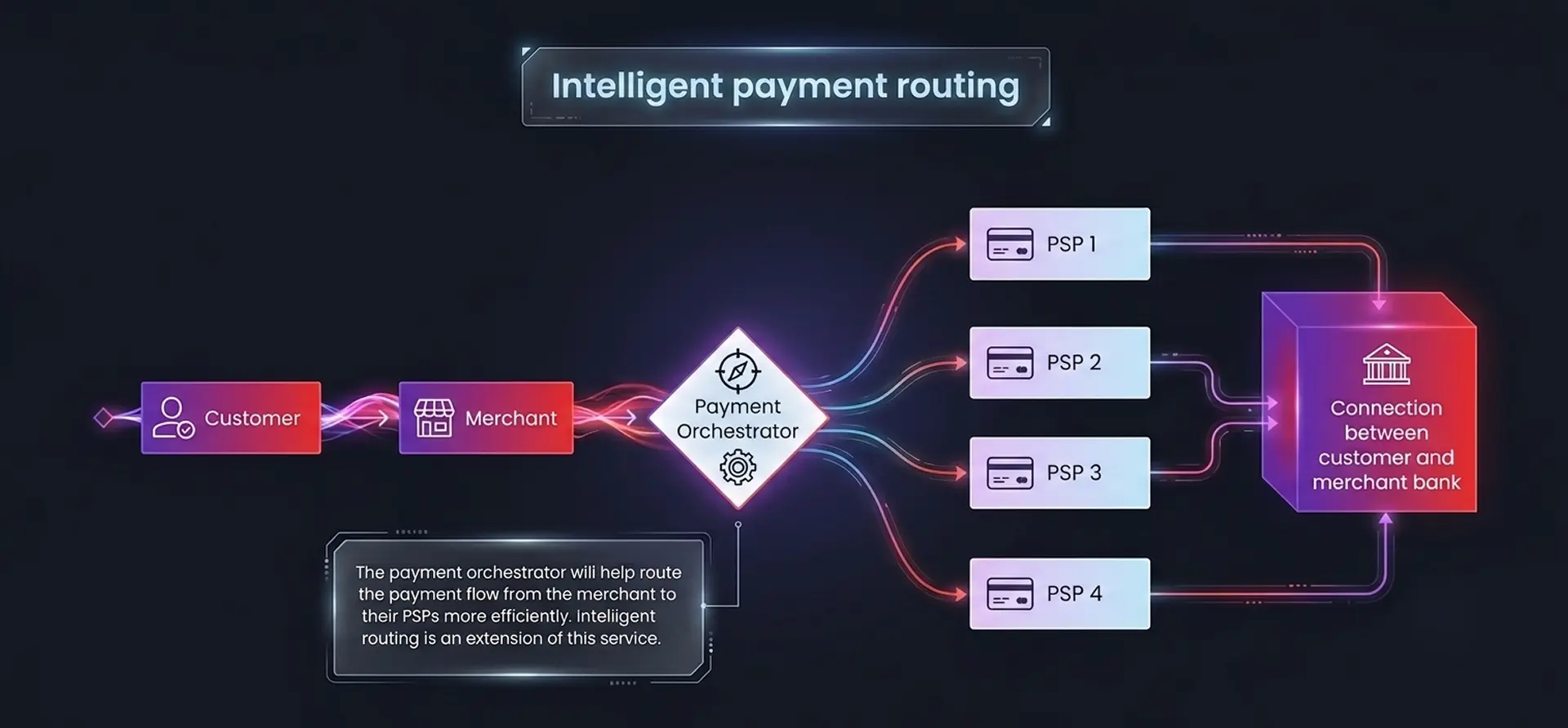
Core Technical Pillars for Revenue Recovery:
- 1.Smart Transaction Cascade Routing: When a primary gateway responds with a soft decline, smart routing engines pass the transaction details in real time (<500ms) to a secondary fallback processor before alerting the buyer.
- 2.Account Updater Services (VAU / ABR): Automated credit card updates keep tokenized stored credentials synchronized with Visa and Mastercard databases, preventing subscription declines caused by simple expiration dates.
- 3.Algorithmic Retry Cycles: Rather than retrying failed cards immediately or at random, machine-learning retries schedule attempts around bank processing hours and consumer paydays.
4 Strategies for Automated Revenue Recovery (Without In-House Payment Experts)
Strategy 1: Implement Intelligent BIN Routing
Connect multiple Merchant Identification Numbers (MIDs) through an orchestration layer or native Checkout Champ payment routing options. Systems reading the card’s Bank Identification Number (BIN) automatically route transactions to the processor with the highest approval rate for that issuing bank.
Strategy 2: Adjust Fraud Threshold Rules
Fine-tune fraud software thresholds by incorporating secondary processor evaluations. Setting custom risk scores prevents system overrides from rejecting valid high-value orders.
Strategy 3: Deploy Contextual Dunning Sequences
When hard declines occur, trigger automated dunning workflows via email or SMS. Match messaging directly to the failure reason
- For Expired Cards: Send a direct, friction-free link to update card details.
- For Soft Errors: Delay messaging slightly while automated retries process in the background.
Strategy 4: Introduce Alternative Payment Methods (APMs)
Adding digital wallets such as Apple Pay, Google Pay, and localized direct-debit options gives customers seamless fallback payment options if a primary physical card fails.
Frequently Asked Questions (FAQ)
What is the difference between voluntary and involuntary churn?
Voluntary churn occurs when a customer explicitly chooses to cancel a service or subscription. Involuntary churn happens passively when a customer’s subscription cancels automatically due to unrecovered failed payments, expired cards, or gateway decline errors.
How do automated Account Updater Services reduce false declines?
Account Updater Services work directly with major credit card networks to automatically refresh stored card tokens when a customer receives a reissued card (e.g., replacement for an expired or lost card). This prevents subscription renewal failures without requiring manual customer intervention.
How quickly should soft declines be retried?
Soft declines caused by network errors should be cascaded to a secondary gateway instantly during payment processing. Soft declines caused by temporary insufficient funds should be retried using algorithmic scheduling over a 7-to-14 day window.
Ready to Fix Leaks in Your Payment Architecture?
Managing payment orchestration, setting up fallback gateway cascades, and eliminating false declines requires precise technical engineering.
Whether you need to integrate specialized recovery logic alongside Checkout Champ or build custom fallback routing into your payment stack, protecting subscription lifetime value and recovering lost enterprise revenue is fully achievable.
Contact Artesian Software Engineers Today for a comprehensive payment routing and recovery assessment.